
10 Healthy Smoothie Recipes for Energy and Wellness
10 Healthy Smoothie Recipes for Energy and Wellness Healthy smoothies…
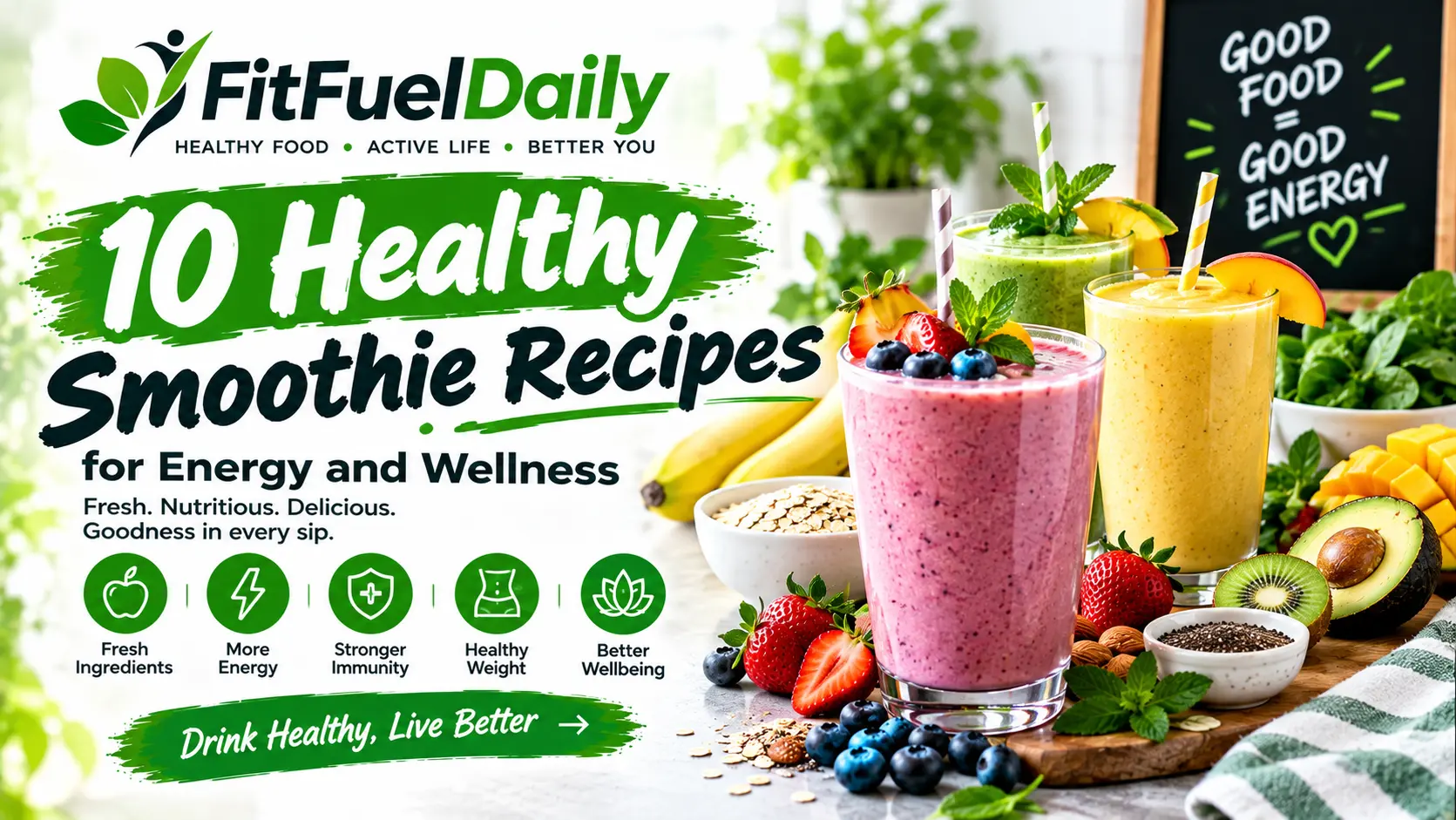
10 Healthy Smoothie Recipes for Energy and Wellness
Healthy smoothies are a simple and delicious way to enjoy fruit, vegetables, yogurt, oats, and other nutritious ingredients. Whether you need a quick breakfast, a refreshing afternoon drink, or an easy snack, homemade smoothies can fit into a balanced lifestyle.
The best healthy smoothie recipes combine ingredients that provide important nutrients, flavor, and satisfying textures without relying on excessive added sugar.
In this guide, you will discover 10 easy smoothie recipes you can prepare at home with a blender and everyday ingredients. Each recipe includes simple instructions and ideas for making your drinks more nutritious.
Why Make Healthy Smoothies at Home?
Homemade smoothies allow you to choose exactly what goes into your drink. You can adjust the ingredients to match your taste, budget, and nutritional needs.
Here are some benefits of making smoothies at home:
- Convenience: Most recipes take only a few minutes to prepare.
- Fruit and vegetable variety: Smoothies make it easier to enjoy different types of produce.
- Flexible ingredients: You can use fresh or frozen fruit, dairy milk, or fortified plant-based alternatives.
- Balanced nutrition: Ingredients such as yogurt, oats, nuts, and seeds can add protein, fiber, and healthy fats.
- Easy customization: You can adjust the sweetness and thickness without adding unnecessary ingredients.
Keep in mind that blending fruit does not remove all its fiber, but drinking a smoothie may be less filling than eating whole fruit for some people. Portion size and ingredients still matter.
1. Banana and Peanut Butter Smoothie
This creamy smoothie combines banana, peanut butter, and milk for a simple breakfast or snack.
Ingredients:
- 1 medium banana
- 1 tablespoon natural peanut butter
- 1 cup milk or unsweetened fortified soy milk
- 2 tablespoons rolled oats
- A pinch of cinnamon, optional
Instructions:
- Peel the banana and add it to your blender.
- Add peanut butter, milk, oats, and cinnamon.
- Blend until smooth.
- Add a little more milk if you prefer a thinner texture.
Healthy tip: Choose peanut butter without added sugar when possible. The combination of banana, oats, and peanut butter provides carbohydrates, fiber, and fats.
2. Strawberry and Greek Yogurt Smoothie
Enjoy a refreshing fruit smoothie with a creamy texture and protein from Greek yogurt.
Ingredients:
- 1 cup strawberries, fresh or frozen
- ½ cup plain Greek yogurt
- ½ cup milk or unsweetened fortified plant milk
- ½ small banana, optional
Instructions:
- Wash fresh strawberries and remove their green tops.
- Add all ingredients to a blender.
- Blend until creamy.
- Serve immediately.
Healthy tip: Plain yogurt helps limit added sugar. If your strawberries are very sweet, you may not need any additional sweetener.
3. Green Spinach and Apple Smoothie
If you want to include more vegetables in your routine, this green smoothie is a great place to start.
Ingredients:
- 1 cup fresh spinach
- 1 small apple, chopped
- ½ banana
- ¾ cup cold water
- A small piece of fresh ginger, optional
Instructions:
- Rinse the spinach and apple thoroughly.
- Add all ingredients to your blender.
- Blend until smooth.
- Add more water if necessary.
Healthy tip: Spinach contributes folate and other micronutrients, while the apple and banana provide natural sweetness. You can gradually increase the spinach if you prefer a stronger green flavor.
4. Mango and Coconut Smoothie
This tropical smoothie is naturally fruity and refreshing, making it a great option on a warm day.
Ingredients:
- 1 cup mango chunks, fresh or frozen
- ½ banana
- ¾ cup milk or unsweetened fortified plant milk
- 2 tablespoons plain yogurt
- 1 tablespoon unsweetened shredded coconut, optional
Instructions:
- Place the mango and banana in a blender.
- Add the milk and yogurt.
- Blend until smooth and creamy.
- Sprinkle with a little shredded coconut if desired.
Healthy tip: Frozen mango creates a thicker texture without requiring ice. Use coconut in moderation because it contains saturated fat.
5. Blueberry and Oat Smoothie
Blueberries and oats make a flavorful combination for a quick morning drink.
Ingredients:
- ¾ cup blueberries, fresh or frozen
- ¼ cup rolled oats
- ½ cup plain yogurt
- ½ cup milk or unsweetened fortified soy milk
- A pinch of cinnamon, optional
Instructions:
- Add the blueberries, oats, yogurt, and milk to your blender.
- Blend until smooth.
- Let the smoothie stand for a minute if you prefer a softer oat texture.
- Add extra milk to adjust the consistency.
Healthy tip: Blueberries provide fiber and colorful plant compounds, while oats contribute soluble fiber. This recipe can be part of a balanced breakfast.
6. Pineapple and Orange Smoothie
Bright and fruity, this smoothie is a refreshing way to enjoy pineapple and orange together.
Ingredients:
- ¾ cup pineapple chunks
- 1 small peeled orange
- ½ cup plain yogurt
- ½ cup cold water
- A few ice cubes, optional
Instructions:
- Prepare the pineapple and orange.
- Add the fruit, yogurt, and water to the blender.
- Blend until smooth.
- Add ice if you prefer a colder drink.
Healthy tip: Whole fruit blended at home generally retains more fiber than strained juice. You do not need to add sugar or syrup to make this smoothie flavorful.
7. Chocolate Banana Protein Smoothie
This smoothie is ideal when you want a chocolate flavor with ingredients that can contribute protein.
Ingredients:
- 1 medium banana
- ¾ cup plain Greek yogurt
- ¾ cup milk or unsweetened fortified soy milk
- 1 teaspoon unsweetened cocoa powder
- 1 tablespoon peanut butter, optional
Instructions:
- Add the banana, yogurt, milk, and cocoa powder to a blender.
- Add peanut butter if desired.
- Blend until creamy.
- Taste and adjust the thickness with additional milk.
Healthy tip: Greek yogurt and milk provide protein without requiring protein powder. If you use plant-based milk, choose a variety with protein if that is your goal.
8. Avocado and Banana Smoothie
Avocado adds a smooth, creamy texture and unsaturated fats to this simple drink.
Ingredients:
- ¼ ripe avocado
- 1 small banana
- ¾ cup milk or unsweetened fortified plant milk
- ¼ cup plain yogurt
- A few ice cubes, optional
Instructions:
- Scoop the avocado into your blender.
- Add the banana, milk, and yogurt.
- Blend until smooth.
- Add ice or a little extra milk as needed.
Healthy tip: Avocado contains unsaturated fats and fiber. Since it is energy-dense, a small portion is enough to create a creamy smoothie.
9. Peach and Yogurt Smoothie
This simple peach smoothie is sweet, creamy, and easy to prepare with fresh or frozen fruit.
Ingredients:
- 1 cup sliced peaches
- ½ cup plain yogurt
- ½ cup milk or unsweetened fortified plant milk
- 1 tablespoon rolled oats, optional
- A pinch of cinnamon, optional
Instructions:
- Add the peaches, yogurt, and milk to a blender.
- Include oats if you want a thicker drink.
- Blend until smooth.
- Serve chilled.
Healthy tip: Frozen peaches are a convenient option when fresh peaches are out of season. Check canned fruit labels if using canned peaches, and choose fruit packed in water or juice rather than heavy syrup when possible.
10. Date and Almond Smoothie
Dates and almonds create a naturally sweet smoothie with a rich, nutty flavor.
Ingredients:
- 2 small pitted dates
- 1 cup unsweetened almond milk
- 1 tablespoon almond butter
- 2 tablespoons rolled oats
- A pinch of cinnamon
Instructions:
- If the dates are firm, soak them in warm water for 5–10 minutes.
- Drain the dates and place them in the blender.
- Add almond milk, almond butter, oats, and cinnamon.
- Blend thoroughly until smooth.
Healthy tip: Dates provide natural sweetness, but they still contribute sugars and calories. Start with two dates and adjust according to your taste. Almond milk is often low in protein, so you can use dairy milk or fortified soy milk if you want a more protein-rich drink.
How to Make Your Smoothies More Nutritious
A healthy smoothie does not need dozens of ingredients. A few simple choices can make a meaningful difference.
1. Include a Source of Protein
Protein can help make a smoothie more satisfying. Consider plain Greek yogurt, milk, fortified soy milk, or silken tofu.
2. Add Fiber-Rich Ingredients
Oats, berries, pears, spinach, and chia seeds can contribute fiber. Add seeds in small amounts and drink enough fluids throughout the day.
3. Limit Added Sugar
Fruit can provide plenty of sweetness. Try to avoid adding large amounts of sugar, honey, flavored syrup, or sweetened juice.
4. Watch Your Portions
Smoothies can contain more energy than expected when they include large amounts of nut butter, sweeteners, juice, or several servings of fruit. Start with a reasonable portion and adjust it to your needs.
5. Choose a Suitable Liquid
Water works well in fruit-based smoothies. Milk, plain yogurt, and unsweetened fortified soy milk can contribute protein and other nutrients. Choose the option that fits your preferences and dietary needs.
6. Use Frozen Fruit for Convenience
Frozen fruit is often affordable, lasts longer, and creates a thicker smoothie. Choose unsweetened frozen fruit whenever possible.
When Is the Best Time to Drink a Smoothie?
There is no single best time for everyone. The right time depends on your routine and what you need from the drink.
- Breakfast: A smoothie with fruit, yogurt, and oats can be a convenient morning meal.
- Between meals: A smaller smoothie may work as a snack.
- After exercise: A smoothie containing protein and carbohydrates can help you refuel after a workout.
- On warm days: Fruit-based smoothies can be a refreshing option, although water should remain an important source of hydration.
A smoothie does not automatically replace a complete meal. If you use one as breakfast or lunch, make sure it contains enough food and nutrients to meet your needs.
Common Smoothie Mistakes to Avoid
Even homemade smoothies can become less balanced when ingredients are used without considering portion size.
Avoid these common mistakes:
- Adding large quantities of honey or sugar.
- Using fruit juice as the main liquid in every recipe.
- Adding too many calorie-dense ingredients at once.
- Assuming that every smoothie is automatically high in protein.
- Replacing most whole meals with drinks without considering overall nutrition.
- Storing a smoothie for too long at room temperature.
For best quality, enjoy your smoothie soon after preparation. If you need to store it, refrigerate it promptly in a clean, sealed container and consume it within about 24 hours. Discard it if it has been left out too long or shows signs of spoilage.
Frequently Asked Questions
Are homemade smoothies healthy?
Homemade smoothies can be part of a balanced diet when they contain suitable portions of fruit, vegetables, and other nutritious ingredients. Their overall nutritional value depends on the recipe and serving size.
Can I drink a smoothie every day?
Many people can enjoy a smoothie daily as part of a varied diet. Include different foods throughout the day, and avoid relying on smoothies as your only source of fruit, vegetables, or meals.
What is the best liquid for healthy smoothies?
Water, milk, and unsweetened fortified plant-based drinks can all work well. Milk and fortified soy milk generally provide more protein than almond or coconut drinks, but nutritional content varies by product.
How can I make a smoothie without added sugar?
Use ripe fruit such as bananas, mangoes, or berries. Plain yogurt and unsweetened milk alternatives can help you control added sugars.
Can smoothies help with weight management?
Smoothies may fit into a weight-management plan, but they do not cause weight loss on their own. Ingredients, portion sizes, total food intake, and overall lifestyle all matter.
Are smoothies good before or after a workout?
A smoothie can provide carbohydrates before exercise or carbohydrates and protein afterward. Choose the portion and ingredients based on your activity, appetite, and personal tolerance.
Final Thoughts
Healthy smoothies are an easy way to experiment with fruit, vegetables, oats, yogurt, and other everyday ingredients. From a classic banana and peanut butter smoothie to a refreshing mango blend, there are plenty of options to suit different tastes.
Start with one or two recipes, adjust them to your preferences, and choose ingredients that support a varied and balanced diet. With a blender and a few simple ingredients, you can make delicious homemade drinks in just a few minutes.
Disclaimer: This article is for general educational purposes only and does not replace personalized medical or dietary advice. Nutritional needs vary from person to person. If you have food allergies, a medical condition, or specific dietary requirements, consult a qualified healthcare professional or registered dietitian when needed.